
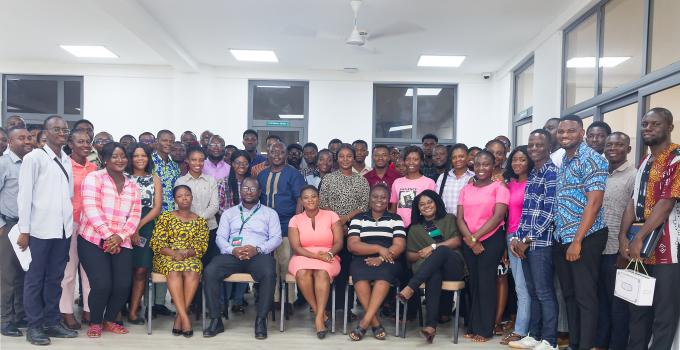
Postgraduate students from across the Kwame Nkrumah University of Science and Technology, Kumasi (KNUST) have completed a three-day grant-writing and proposal development workshop. Organised by the Graduate Students' Association of Ghana-KNUST (GRASAG-KNUST) in collaboration with the Office of Grants and Research (OGR) and the School of Graduate Studies, the workshop served as a capacity-building and information session for all postgraduate students intending to apply to the GRASAG Research Fund (GReF) 2026.
Students from colleges across the university attended across the three days, with different cohorts joining each day. Sessions were led by OGR Grants and Research Managers, each addressing a distinct phase of the grant acquisition process.
Mrs. Patricia Amoah Yirenkyi opened with an overview of the graduate funding landscape, helping participants map the range of funding sources available to postgraduate researchers, from governments and development agencies to academic institutions and private organisations.
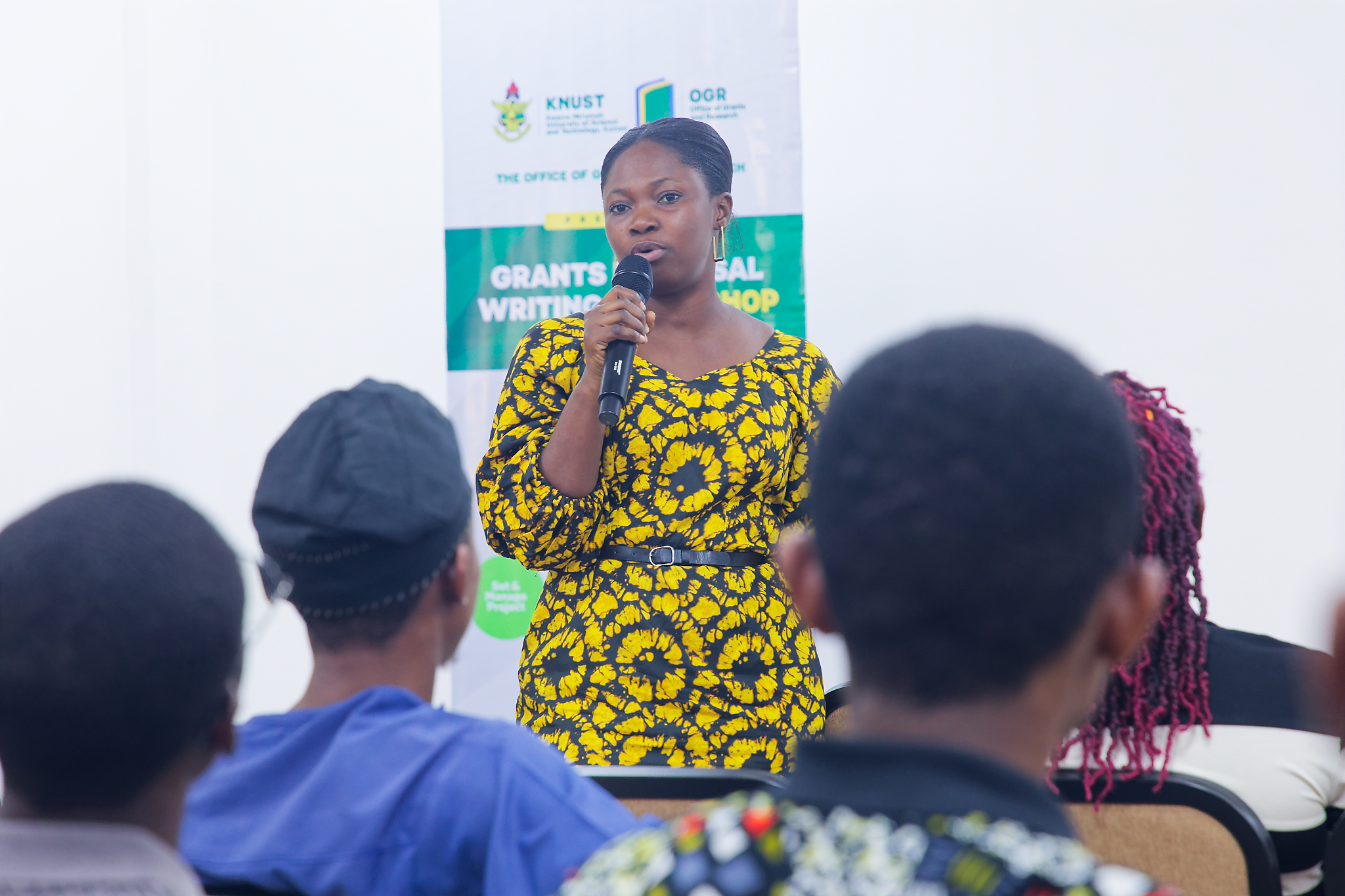
Mr. Bernard Asamoah Barnie, Assistant Grants and Research Manager, guided participants through funding opportunity announcements. He showed students how to identify suitable calls, read eligibility requirements carefully, and position their research to respond to what donors are looking for.
Dr. Nana Esi Aduku, Grants and Research Manager, focused on building competitive proposals. Her session addressed structuring arguments, demonstrating impact, and aligning research ideas with funder priorities.
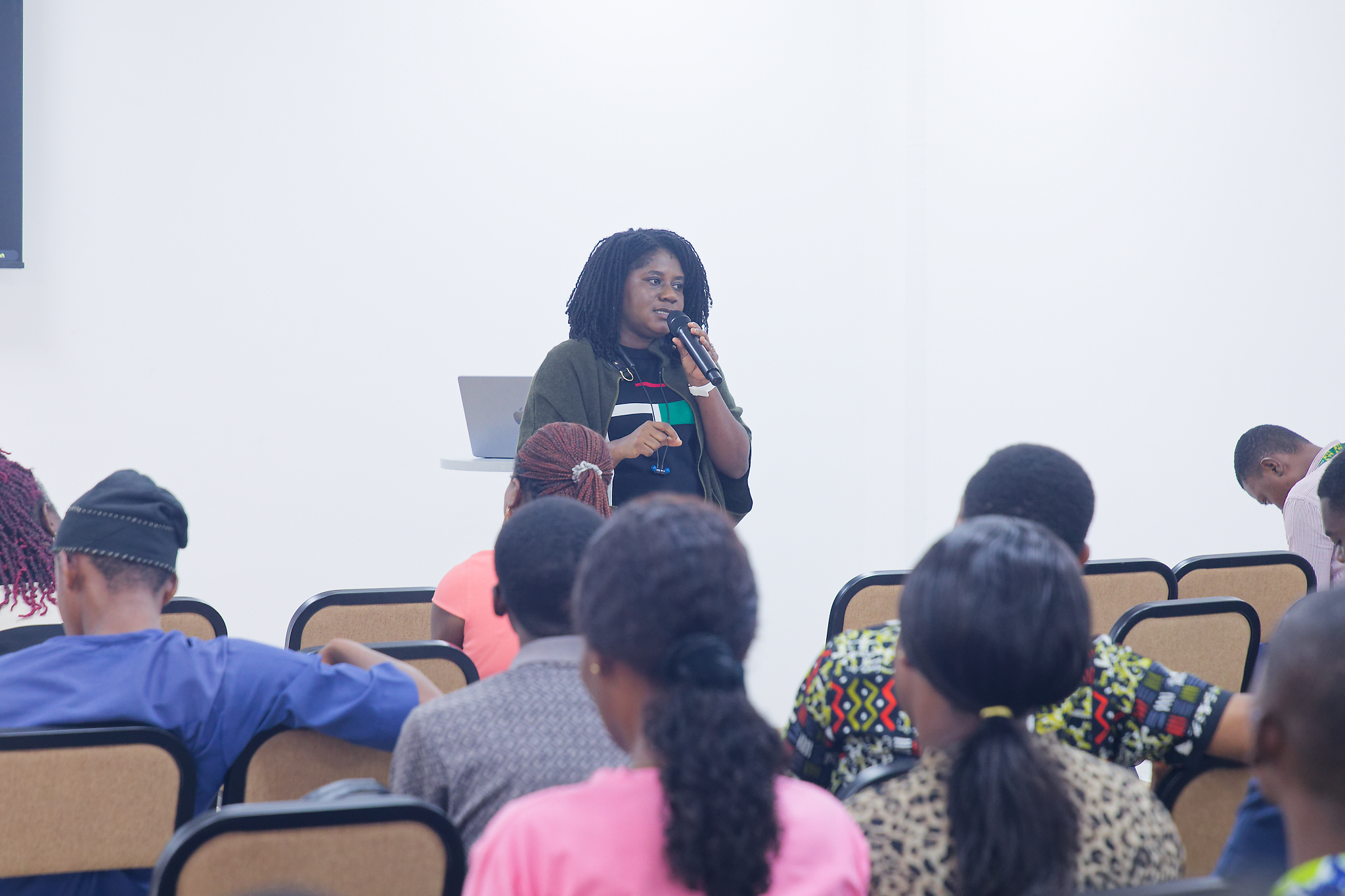
Mrs. Hannah Adom Eyison, Grants and Research Manager for the College of Science, led the budgeting session. She walked participants through developing realistic, transparent project budgets and justifying each cost line in terms that donors expect and understand.
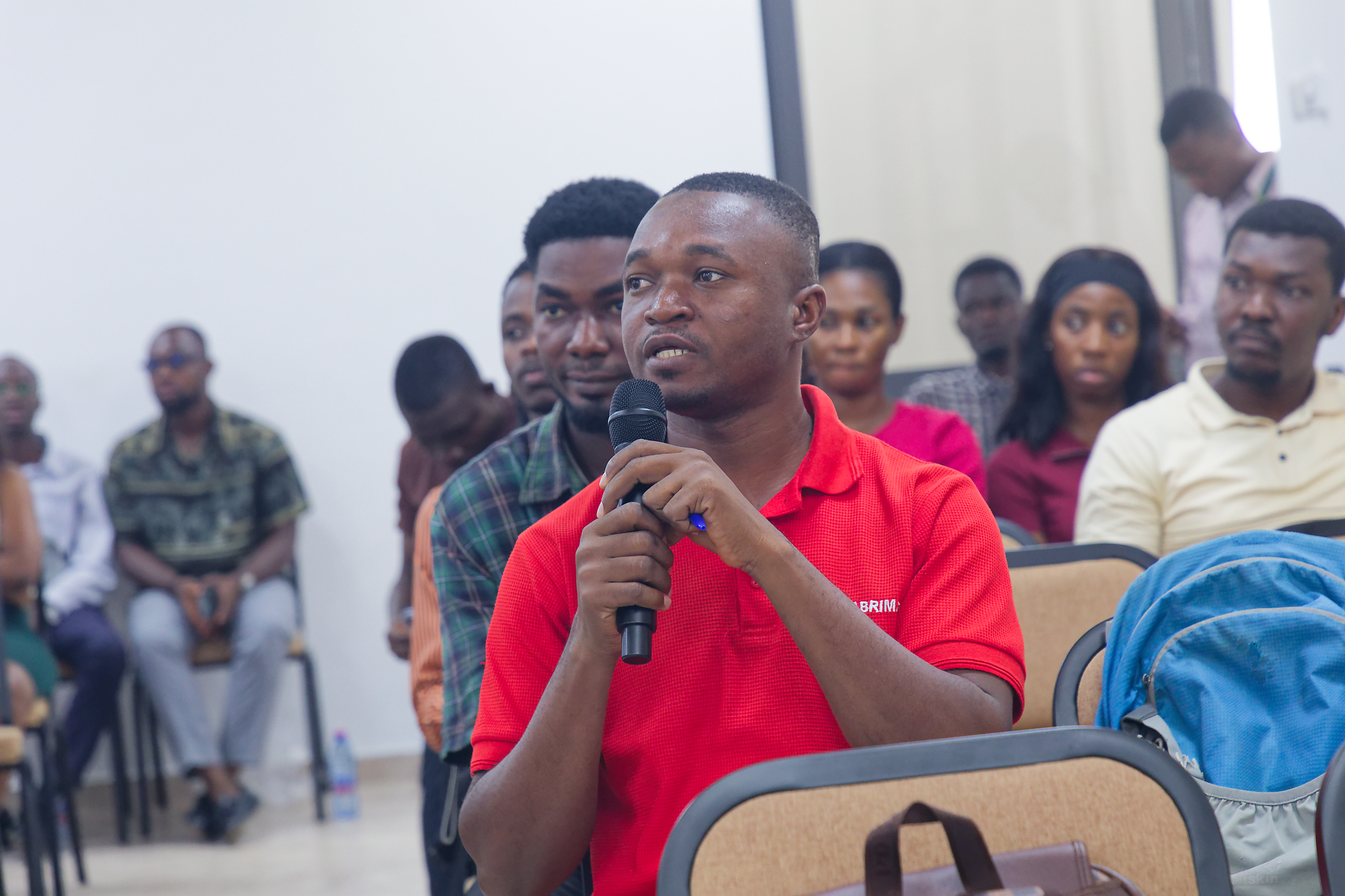
The workshop also featured engaging Q&A after each presentation where participants had the opportunity to ask questions from the presentations, demystify institutional processes and clarify some misconceptions. Together, the sessions covered the full arc of grant acquisition: finding opportunities, reading funding calls, writing proposals, building budgets, managing awards after funding is secured, and avoiding the common mistakes that cause strong applications to fail. Practical exercises gave participants hands-on experience before the GReF 2026 call opens.
Research funding is a key factor in research and shapes what postgraduate students can realistically achieve during their thesis research phase. It supports laboratory work, field research, academic publications, conference participation, and professional development that would otherwise be beyond reach. Through this workshop, postgraduate students have developed the skills to pursue funding for innovative and ambitious research ideas and to compete for it on equal terms.