
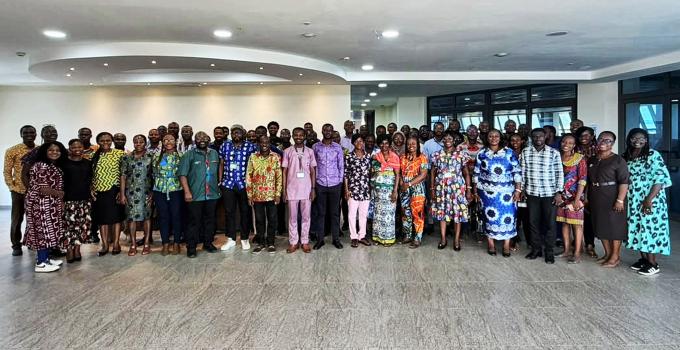
The College of Art and Built Environment (CABE), in collaboration with the Office of Grants and Research (OGR) of the Kwame Nkrumah University of Science and Technology, Kumasi (KNUST), has organised a capacity-building workshop on the use of digital tools in proposal development. The workshop formed part of efforts to strengthen the grant writing skills of faculty, researchers, and administrative staff and to improve their competitiveness in securing research funding through modern digital tools.
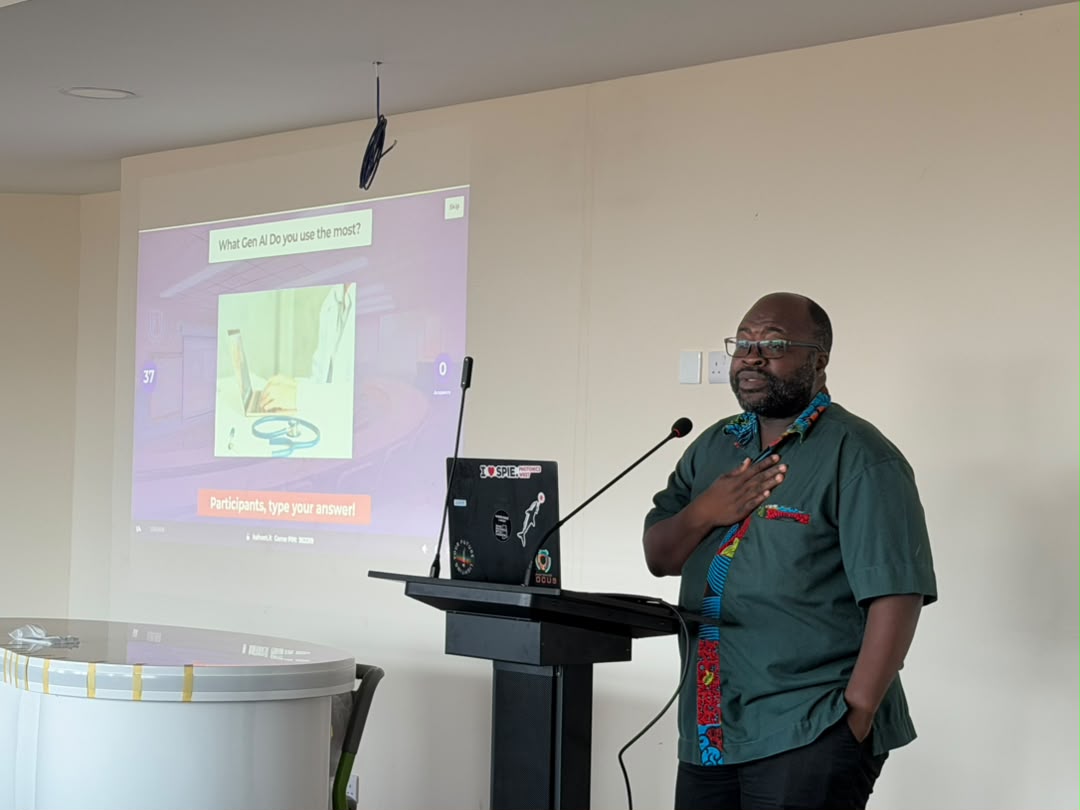
Speaking during the first session, Dr. Akyana Britwum led discussions on Generative Artificial Intelligence and prompt engineering. He explained that AI should not be viewed only as a writing assistant but as a thinking partner that can support idea development and strengthen proposal quality. He demonstrated how AI tools can be used to review draft proposals, identify weaknesses, and suggest improvements.
Dr. Britwum further emphasised that successful proposal writing begins with a careful review of funders’ guidelines, including formatting requirements and word limits. He encouraged participants to maintain well-organised records of previous proposals, noting that unsuccessful applications could be revised and reused for future funding opportunities. He also highlighted the role of AI in refining abstracts and executive summaries to align with specific funding calls, while cautioning participants to critically review all AI-generated outputs before use.
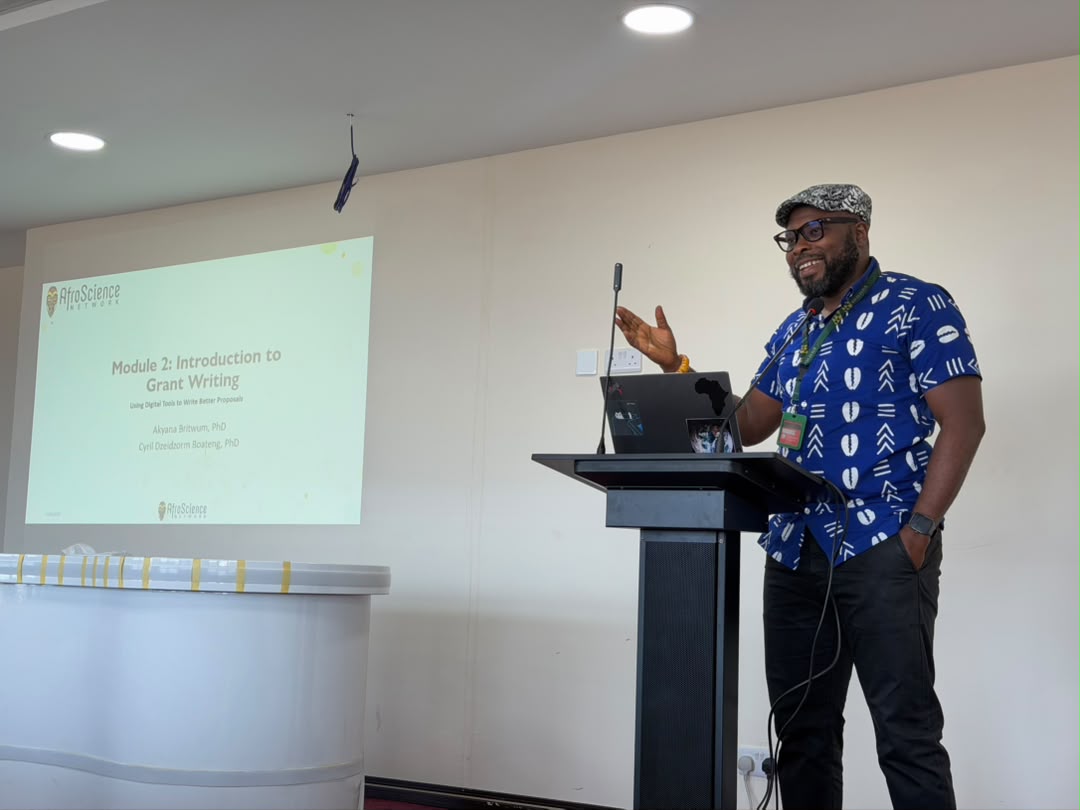
The second session was facilitated by Dr. Cyril Dziedzorm Boateng, who focused on grant writing strategies and the effective use of digital tools in proposal development. He stressed that a strong proposal must clearly define the research problem at the beginning and demonstrate its significance and relevance to society. He encouraged researchers to position their work in ways that clearly communicate impact and value.
Dr. Boateng also urged participants to align their research with the Sustainable Development Goals (SDGs), noting that many funding agencies prioritise projects that contribute to global development outcomes. He further emphasised the importance of identifying knowledge gaps through thorough literature review and clearly demonstrating how proposed studies address these gaps. Using groundwater access as an example, he illustrated how research problems can be connected to real-life human experiences and development challenges.
“AI is your thinking partner, not your ghostwriter. You are responsible for the accuracy and originality of your work.” — Dr. Cyril Dziedzorm Boateng
A key component of the workshop focused on digital tools that support literature review and academic writing. Participants were introduced to Research Rabbit, SciSpace and Insiteful, literature mapping tools that help researchers improve literature discovery and reduce the time spent on manual searching.
Facilitators finally encouraged participants to critically verify all AI-generated outputs to ensure accuracy. They explained that AI should serve as a complement to, rather than a replacement for, scholarly judgement and analytical thinking.