
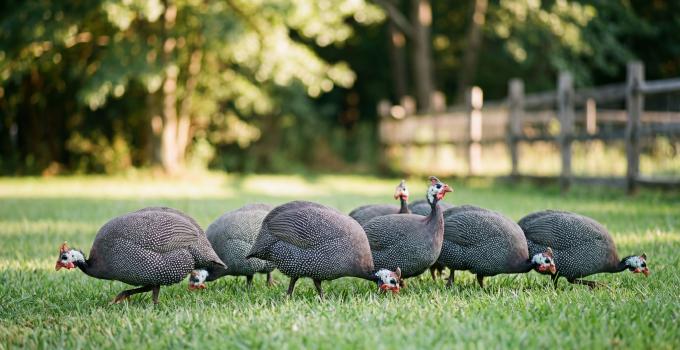
In the pursuit of enhancing livestock productivity and ensuring sustainable food security, scientific research continues to play a critical role in uncovering the biological mechanisms that drive animal growth and performance. At Kwame Nkrumah University of Science and Technology (KNUST), cutting-edge research is advancing the understanding of indigenous poultry species, with the aim of improving their productivity under local conditions.
One such innovative study is led by Dr. Bismark Kyei of the Department of Animal Science, Faculty of Agriculture. His research focuses on unraveling the molecular and genetic differences between indigenous and commercial guinea fowl, with the ultimate goal of enhancing the performance of local breeds.
Bridging the Gap Between Indigenous and Commercial Breeds
The project, titled “The Transcriptome and Gene Regulatory Pathways of Skeletal Muscles Associated with Commercial and Indigenous Guinea Fowls,” seeks to investigate how gene expression influences growth, muscle development, and overall productivity in guinea fowls.
Commercial guinea fowl breeds are widely preferred in modern poultry production systems due to their superior performance traits, including:
- Higher body weight
- Increased carcass yield
- Faster growth rates
In contrast, indigenous guinea fowl, although highly adapted to local environmental conditions and more resilient to stress, typically exhibit slower growth rates and lower meat yield. This productivity gap presents both a challenge and an opportunity for genetic improvement.
Understanding the Role of Genes and RNA
At the core of this research is transcriptomics, the study of all RNA molecules expressed within a cell or tissue. By examining gene expression patterns in key tissues such as skeletal muscle, the study aims to identify the molecular drivers underlying performance differences between the two groups.
Through advanced RNA sequencing and bioinformatics analysis, the research seeks to uncover:
- Genes associated with rapid growth and enhanced muscle development
- Regulatory pathways that influence metabolism, feed efficiency, and body size
- Key molecular markers linked to high productivity
Importantly, the study also explores complex gene regulatory networks, including interactions among mRNA, microRNA (miRNA), and circular RNA (circRNA), to provide a comprehensive understanding of growth regulation in guinea fowl.

Towards Genetic Improvement of Indigenous Breeds
A central objective of this project is to translate molecular findings into practical breeding solutions. By identifying beneficial genes and regulatory mechanisms present in commercial breeds, the research aims to support the genetic improvement of indigenous guinea fowl populations.
This could lead to:
- Enhanced growth rates in local guinea fowl
- Improved meat production and carcass quality
- Increased efficiency and profitability for farmers
These improvements can be achieved through targeted selective breeding programmes and, in the long term, through advanced genomic-assisted selection strategies that retain the adaptability of indigenous birds while improving their productivity.
Advancing Agricultural Innovation and Food Security
This research underscores the transformative role of molecular biology and genomics in modern animal agriculture. By integrating traditional animal breeding with advanced genetic and bioinformatics tools, the project contributes to sustainable solutions for increasing poultry production in Ghana and similar environments.
Aligned with the goals of United Nations Sustainable Development Goal 2 (Zero Hunger), the study supports efforts to improve local food systems, enhance rural livelihoods, and reduce dependence on imported poultry products.
Through pioneering initiatives like this, KNUST continues to demonstrate leadership in agricultural research and innovation, delivering solutions that are not only scientifically robust but also locally relevant and impactful.