
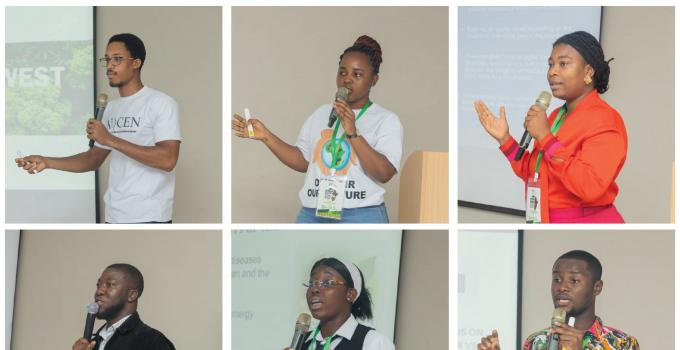
The Air Quality (AQ) Ambassadors programme under the African School on Air Quality and Pollution Prevention at KNUST is tackling one of the most pressing environmental and public health challenges in Ghana and across West Africa that is air pollution. With growing urbanization, increased vehicular emissions, and reliance on traditional cooking and processing methods, poor air quality continues to pose significant health risks, particularly for vulnerable populations such as women, children, and informal sector workers. This project responds to the urgent need for widespread awareness, behavioral change, and practical solutions to reduce exposure to harmful pollutants.
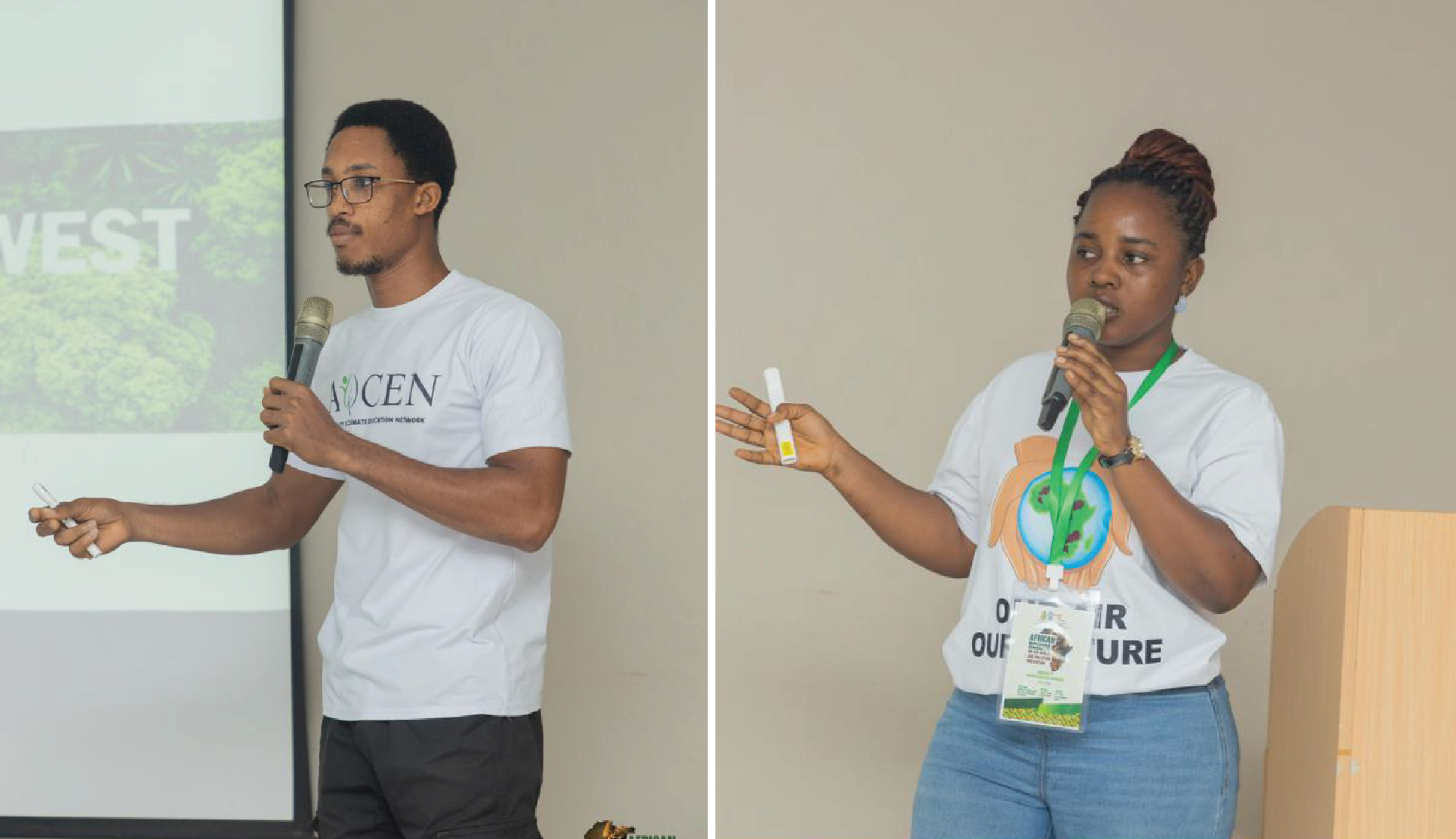
Mr. Billchris Tetteh Ashiangmor, AQCEN Team Lead, Breathe Clean West Africa (left) and Miss Mercy Mawunyo Apaw, Project Lead, Our Air Our Future Team (right)
The AQ Ambassadors programme adopts a multi-level, community-centered approach that integrates scientific research, education, advocacy, and stakeholder engagement. Unlike conventional top-down interventions, this initiative emphasizes youth empowerment and grassroots participation. By training student ambassadors, establishing Clean Air Clubs, and engaging local communities through campaigns and media, the project ensures that knowledge is not only disseminated but also translated into action.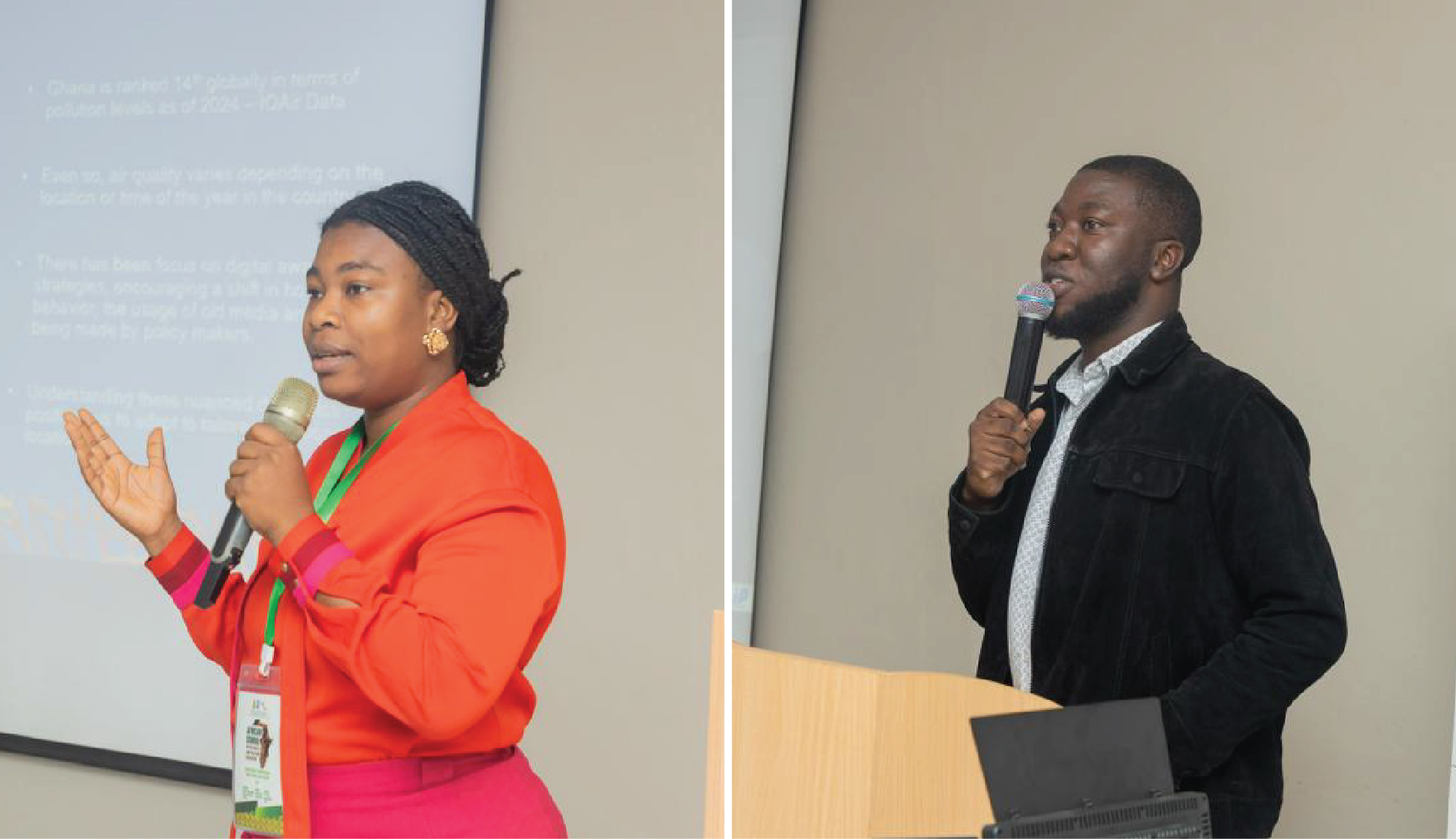
Miss Shaddai Empress Molson Gattor, Project Lead, Breathe Easy Live on West Africa (left), and Mr. Terry Kwame Azaglo, Project Lead, Coastal Champions for Clean Air: A Network & Knowledge Platform for Ghana's Fish Smoking Processors (right)
A key innovation of the programme lies in its combination of research and practical implementation. For instance, field studies conducted in communities such as Jamestown explore the health impacts of traditional fish smoking, while also promoting cleaner technologies like the Ahotor stove. The project identifies critical gaps between the availability of clean-air technologies and their adoption, addressing barriers through awareness, financing models, and policy dialogue.
Major activities under the project include school outreach programmes, community campaigns, stakeholder engagements, and digital advocacy. These efforts have led to the training of student ambassadors, the establishment of advocacy clubs, the production of educational materials, and the engagement of over 500 community members through various platforms. Additionally, collaborations with institutions such as EPA Ghana, CSIR, and other partners have strengthened the policy and technical dimensions of the initiative.
The immediate outputs; trained youth advocates, informed communities, and increased visibility of clean-air solutions, are already translating into meaningful change. Communities are becoming more aware of pollution risks, stakeholders are engaging in policy discussions, and there is growing interest in adopting cleaner technologies. These outcomes are expected to drive long-term improvements in public health and environmental sustainability.
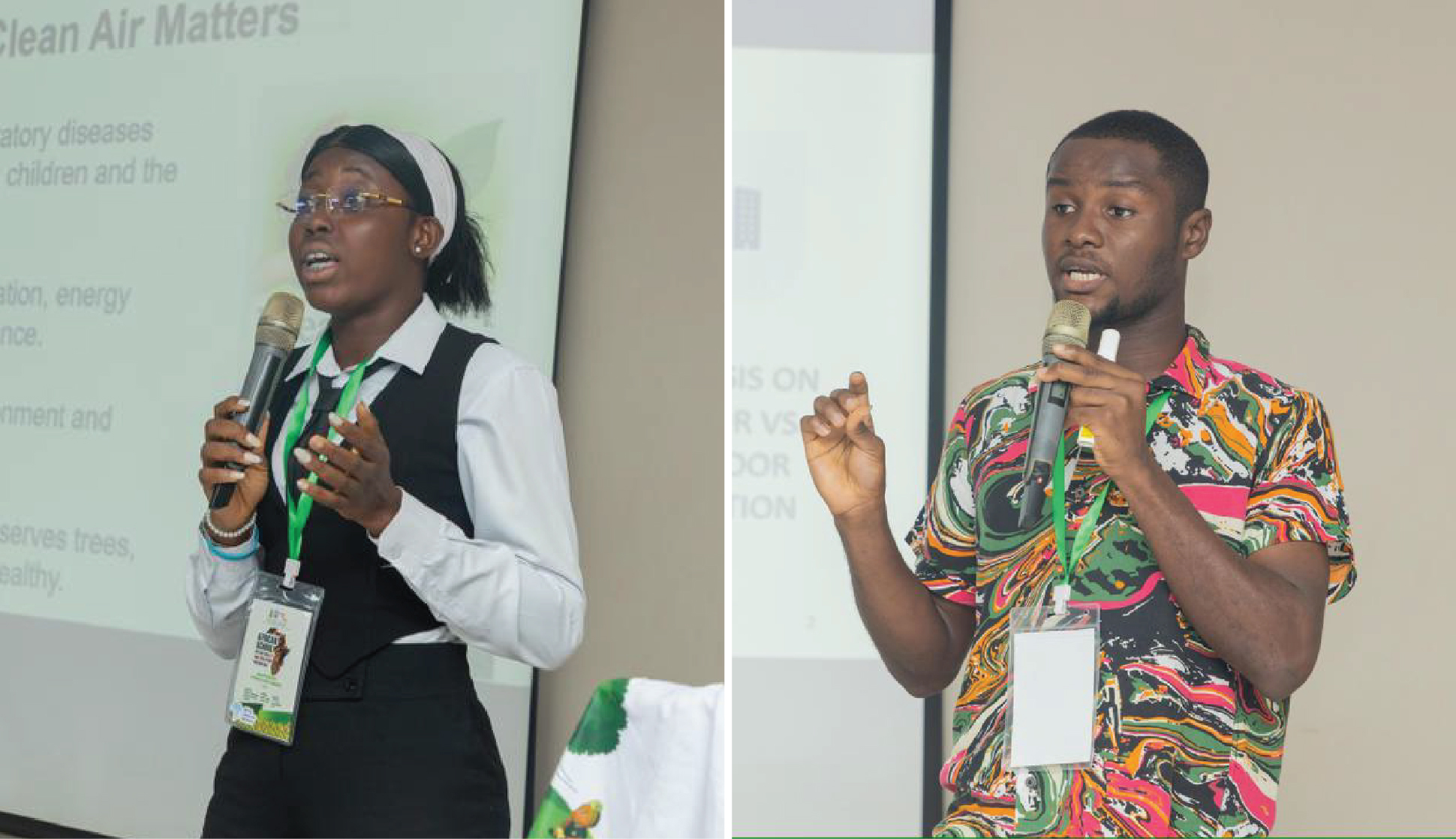
Miss Amina Amponsah Fordjour, Project Lead, Breathing Green (left) and Mr. Godwin Ebo Fosu, Project Lead, Catch Them Young: Clean Air Education for Kids (right)
The programme holds strong policy relevance, as it contributes to national environmental and public health goals while aligning with global priorities such as the Sustainable Development Goals, particularly those related to health, sustainable cities, and climate action. It also presents opportunities for industry uptake, especially in the scaling of clean cooking and processing technologies.
Ultimately, the AQ Ambassadors initiative was inspired by the urgent need to bridge the gap between scientific knowledge and community action. The project team’s personal commitment to improving public health and environmental outcomes is evident in their hands-on engagement and innovative strategies. This initiative seeks to create lasting impact, empowering individuals, influencing policy, and building a future where clean air is accessible to all.