
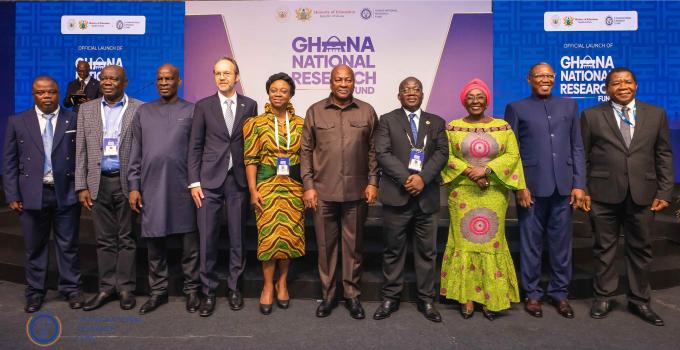
In a historic ceremony that signals a paradigm shift in Ghana's approach to knowledge creation and innovation, President John Dramani Mahama officially launched the Ghana National Research Fund (GNRF).
For the research community at the Kwame Nkrumah University of Science and Technology, the launch represents more than a funding announcement. It is validation of years of advocacy, a recognition of the critical role that homegrown research must play in addressing Ghana's developmental challenges, and a call to action for our scholars to step forward with solutions that can transform the nation.
The establishment of the GNRF comes at a pivotal moment in Ghana's development trajectory. With a growing economy, an expanding population, and mounting challenges in agriculture, healthcare, energy, and governance, the need for evidence-based, locally generated solutions has never been more urgent. KNUST has long been at the forefront of addressing these challenges through cutting-edge research, from developing drought-resistant crop varieties and advancing renewable energy technologies to pioneering telemedicine solutions and contributing to policy formulation on natural resource governance. Through initiatives such as the KNUST Research Fund (KReF), the University has steadily built institutional capacity, enabling faculty to secure competitive grants and translate their findings into tangible interventions that directly impact communities across Ghana.
The GNRF is expected to build on the foundation established by the KNUST Research Fund (KReF), which has strengthened staff capacity in securing and managing external research grants. Through the new national fund, KNUST researchers will have greater opportunities to scale their work, engage policymakers and industry, and enhance their influence at both national and regional levels. Moreover, the Fund's priority areas, namely food systems transformation, health innovation, digital and industrial development, and climate resilience, closely align with KNUST's research strengths, positioning the University's faculty to compete strongly for these resources.
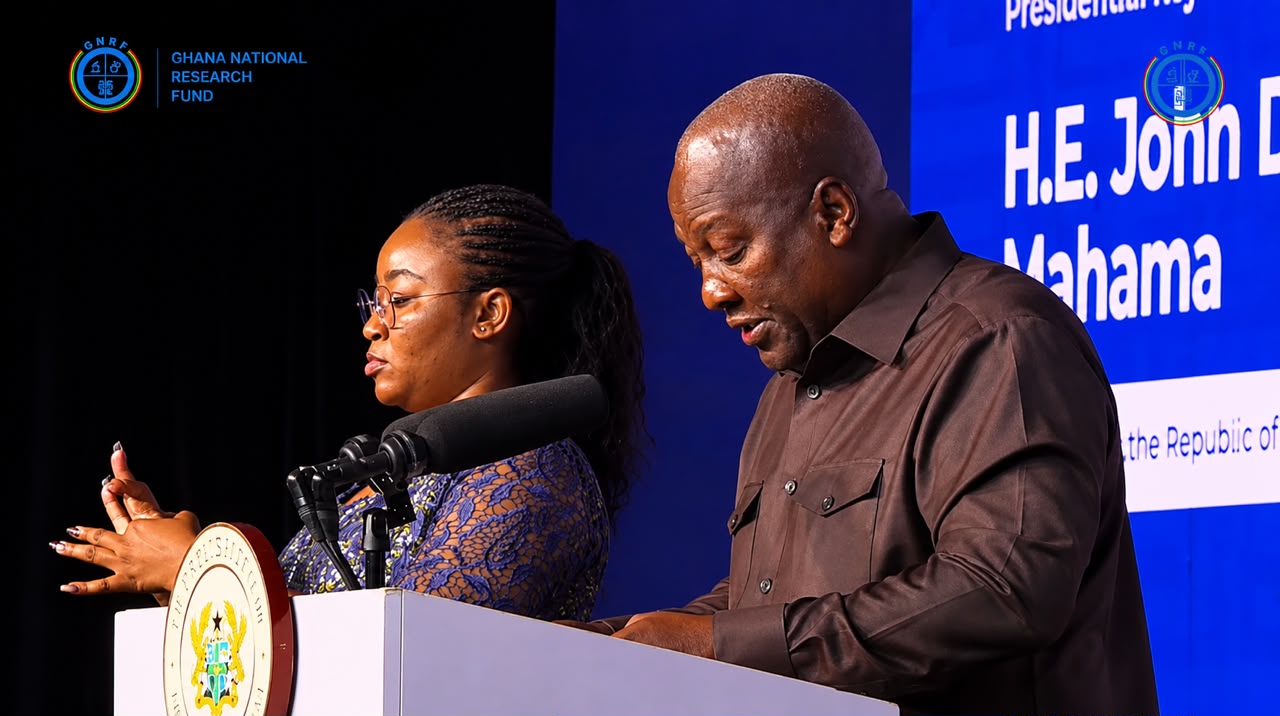
KNUST was well represented at the historic launch, with Mrs Eunice Adu-Boahen, IP Administrator for the Intellectual Property Unit in attendance. Mrs Adu-Boahen played an active role in supporting the development of the legislation that established the Fund, particularly in the areas of intellectual property and research administration, bringing her expertise to bear on shaping the framework that will govern how research outputs are protected and commercialised under the GNRF.
Ghanaian researchers have operated in a landscape of uncertainty, relying on short-term project funding, competing for scarce external grants, and watching their work gather dust on library shelves rather than informing policy or being transferred to industry. The GNRF is designed to reverse this trend and redefine the future of research in Ghana
The Fund will provide sustainable, predictable financing for research across thematic areas critical to national development. These include agricultural transformation, health innovation, digital and industrial development, climate resilience, and governance reform. The goal is not merely to produce academic publications but to generate actionable knowledge that creates jobs, strengthens industries, and improves the quality of life for all Ghanaians.
The launch of the GNRF marks the achievement of a longstanding policy goal in Ghana's development. Its philosophy draws on the early belief that true self-reliance requires building domestic scientific and technological capacity.
The Fund is designed to help Ghana shift from being a consumer of global innovation to a producer of local solutions. Its establishment was enabled by the Ghana National Research Fund Act, 2020 (Act 1056), which provided the legislative framework that turned the long-held concept into reality
President Mahama issued a direct challenge to researchers and academic institutions to focus on practical solutions to national challenges, ensure that research findings are translated into commercial products and scalable interventions, and engage meaningfully with policymakers and industry to ensure that knowledge is put to work.

He noted that while Ghanaian researchers had produced many valuable innovations over the years, the country had struggled to commercialise research outputs. The GNRF, he said, would prioritise projects with clear pathways to impact, whether through policy influence, industrial application or community benefit.
For KNUST, the launch of the GNRF presents a significant opportunity. With its strong tradition in science and technology education, expanding research capacity, and commitment to innovation, the University is well positioned to play a leading role in this new era of research and development. The Fund represents a direct investment in the ability of KNUST researchers to address Ghana's development challenges, with a strong emphasis on translating research into commercial products, policy solutions, and tangible community benefits. This focus aligns with KNUST's growing culture of innovation and entrepreneurship, grantsmanship and technology transfer.
The GNRF is expected to build on the foundation established by the KNUST Research Fund (KReF), which has strengthened staff capacity in securing and managing external research grants. Through the new national fund, KNUST researchers will have greater opportunities to scale their work, engage policymakers and industry, and enhance their influence at both national and regional levels. Moreover, the Fund's priority areas, namely food systems transformation, health innovation, digital and industrial development, and climate resilience, closely align with KNUST's research strengths, positioning the University's faculty to compete strongly for these resources.
The Office of Grants and Research (OGR) serves as KNUST’s central hub for research funding support. We guide our researchers through every stage of the grant lifecycle, from conceptualizing competitive proposals to post-award management. As the university’s designated point of contact for the GNRF, the OGR is the definitive resource for accessing and optimizing these funds. When it comes to grant success, we are the office to see.