
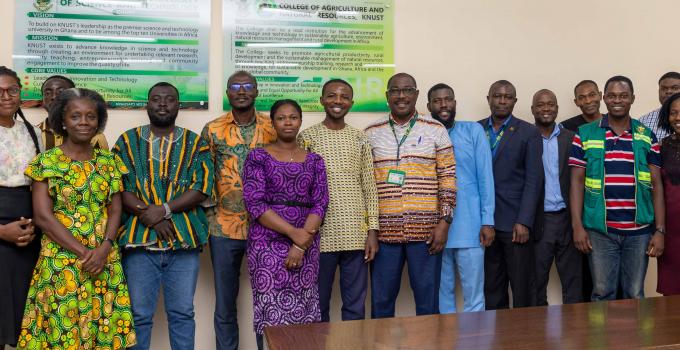
The Office of Grants and Research (OGR) on Thursday, 12 February 2026, held an engagement session with Principal Investigators (PIs) from the College of Agriculture and Natural Resources (CANR) to discuss the College’s 2026 OGR Action Plan and address key issues affecting effective grantsmanship and innovation. The meeting took place at the Provost’s Conference Room in the New Classroom Block.

In his opening remarks, the Provost of CANR, Prof. Dadson Awunyo-Vitor, underscored the importance of strengthening the College’s capacity in research administration. He emphasized the need to improve grant management processes and foster stronger internal collaborations to advance CANR’s research and innovation agenda.
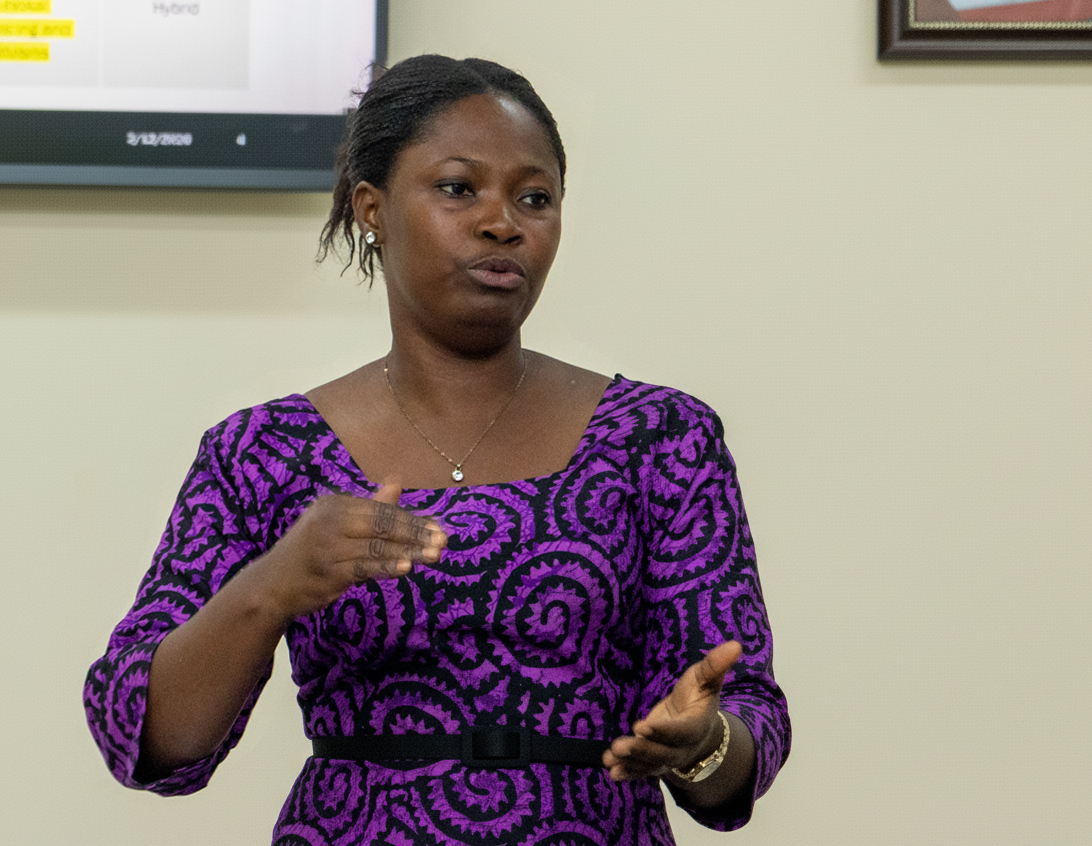
The College Grants and Research Manager, Mrs. Patricia Amoah Yirenkyi, presented the 2026 CANR OGR Action Plan, highlighting strategic priorities for research development within the College. Her presentation provided participants with clarity on institutional expectations, compliance obligations, and the strategic alignment of research activities with the University’s broader research vision and goals.
A key part of the engagement was an open forum where PIs shared challenges encountered in the management of research grants. Discussions centered on issues such as compliance requirements related to finance and procurement, which often affect the timely disbursement of funds and project implementation timelines. Participants also raised concerns about donor reporting expectations, project monitoring processes, and the need for strengthened administrative and technical support to address emerging challenges more efficiently.
OGR representatives used the platform to clarify institutional grant management procedures, provide guidance on best practices, and identify areas requiring enhanced support and capacity‑building interventions.
The program concluded with discussions on actionable next steps aimed at improving research coordination, enhancing compliance mechanisms, and strengthening institutional support systems for PIs. Participants also interacted during networking breaks over snacks and lunch, creating an informal space for further dialogue and collaboration.